Ringdown gives every client its own lines on the voice workspace you already pay for.
Per-client line quotas a model proposes from your call events, a queue that paces one client's batch instead of ringing everyone else busy, and a monthly statement for each client, shown in its GoHighLevel sub-account.
Per client, per month. Read one statement before you pay for any.
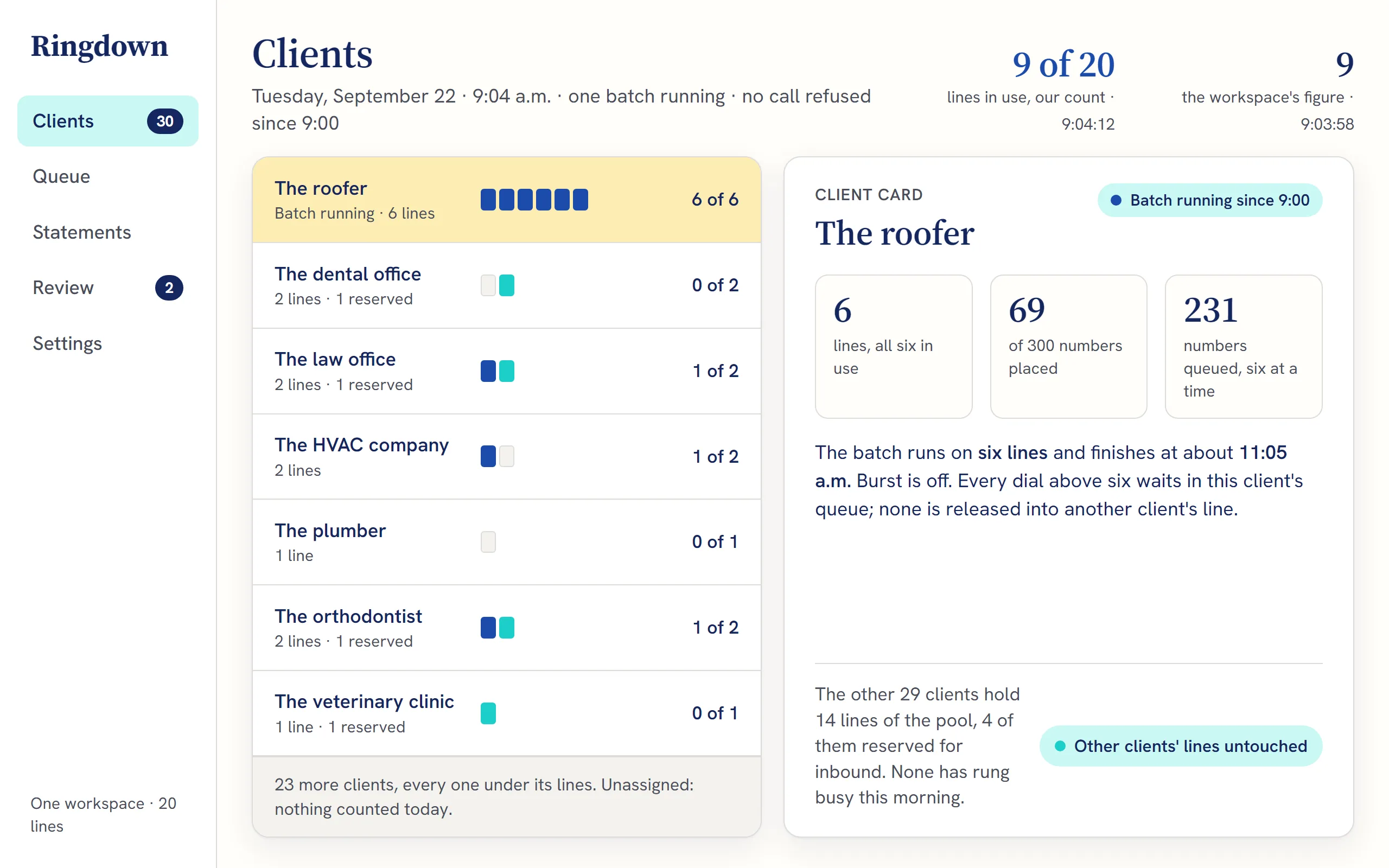
The usual fix for a full pool is a bigger pool.
But a bigger pool is still one pool, and the 9 a.m. batch takes every line it can reach.
Twenty lines are enough once each client has its own share.
- $4 per client, per month
- 20 lines the pool stays the size it is
- 6 lines a 300-number batch runs on six and finishes later
A fair objection
Fine. Buy 40 more slots at $8 each and be done with it.
It works, and $320 a month is less than one lost dental client.
Nothing else changes either. The endpoint stays, no workflow gains a client id, and nobody has to call the roofer.
Retell also throttles bursts at three times the quota, so a 300-number batch on 20 lines runs 60 calls at once.
But a throttled batch still bursts, and every burst call bills $0.10 a minute for its whole length.
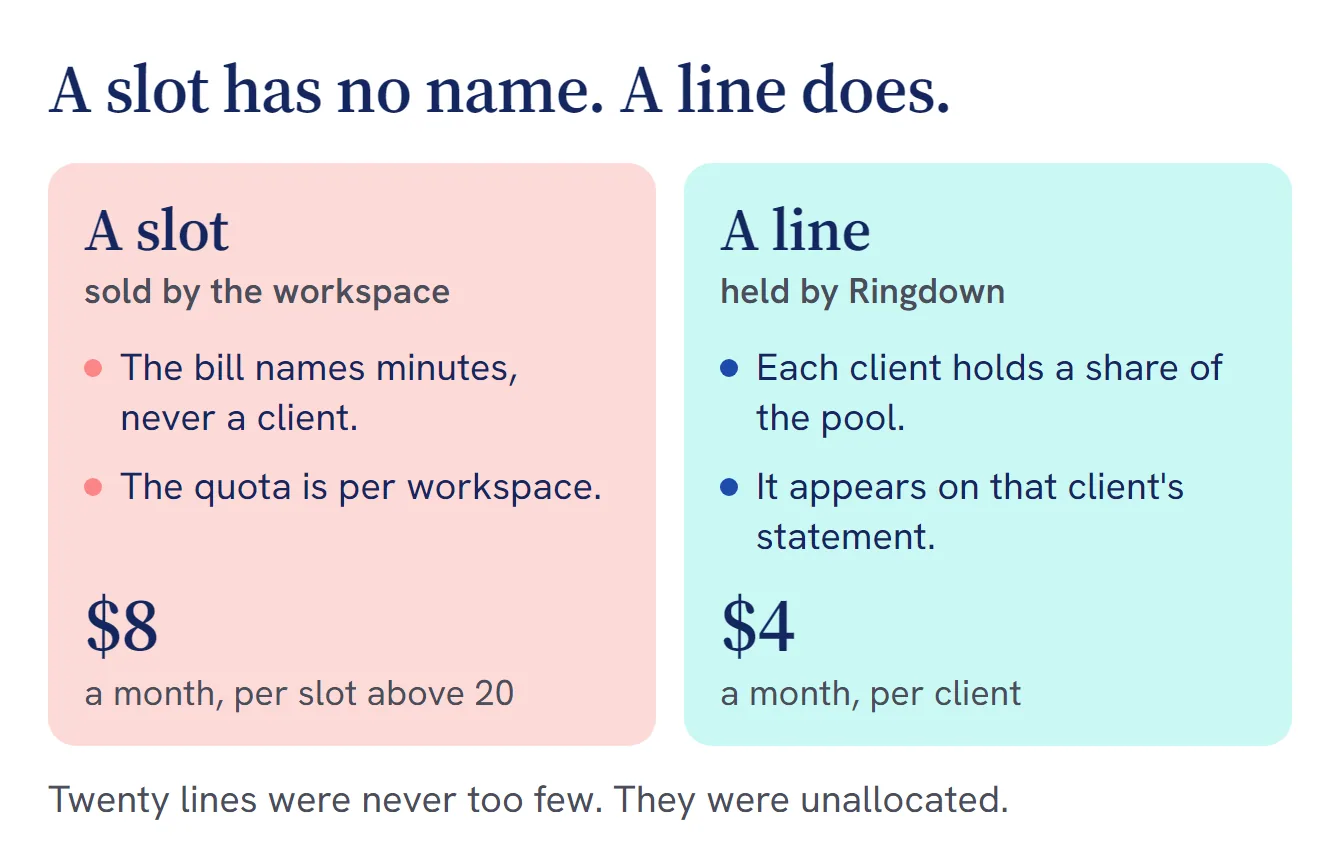
- A slot has no name. The bill names minutes, never a client.
- The roofer's batch fills 60 lines as readily as 20.
- More slots do not fix a miscount. In May 2026 lines rang busy with no batch running, because the vendor's count was wrong.
The statement, on screen
From the 9 a.m. batch to the dental office's statement
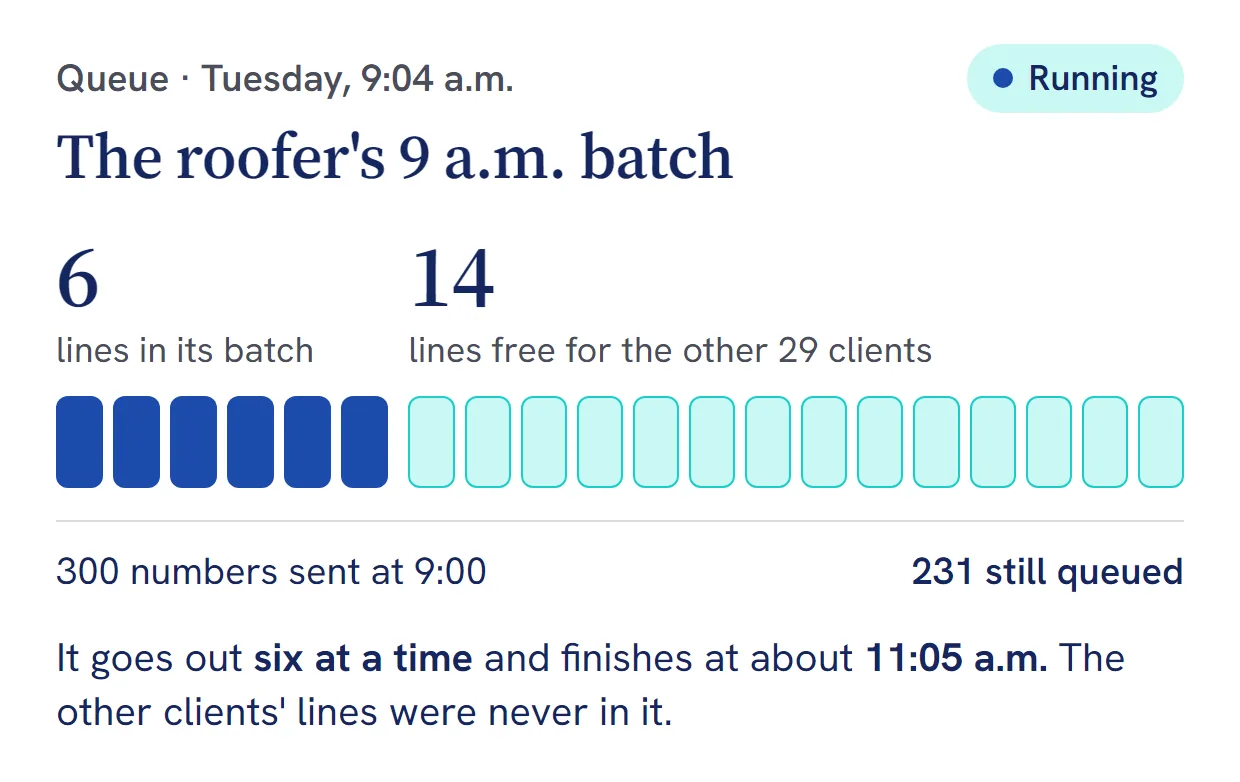
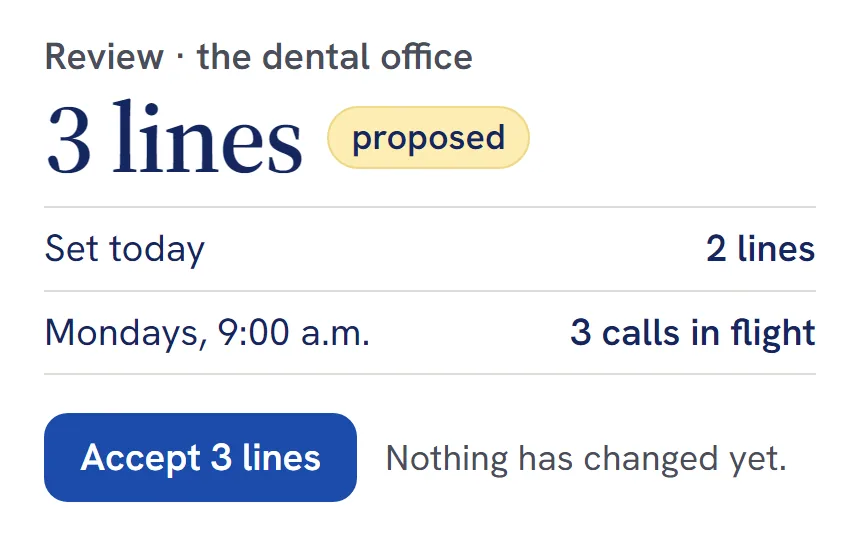
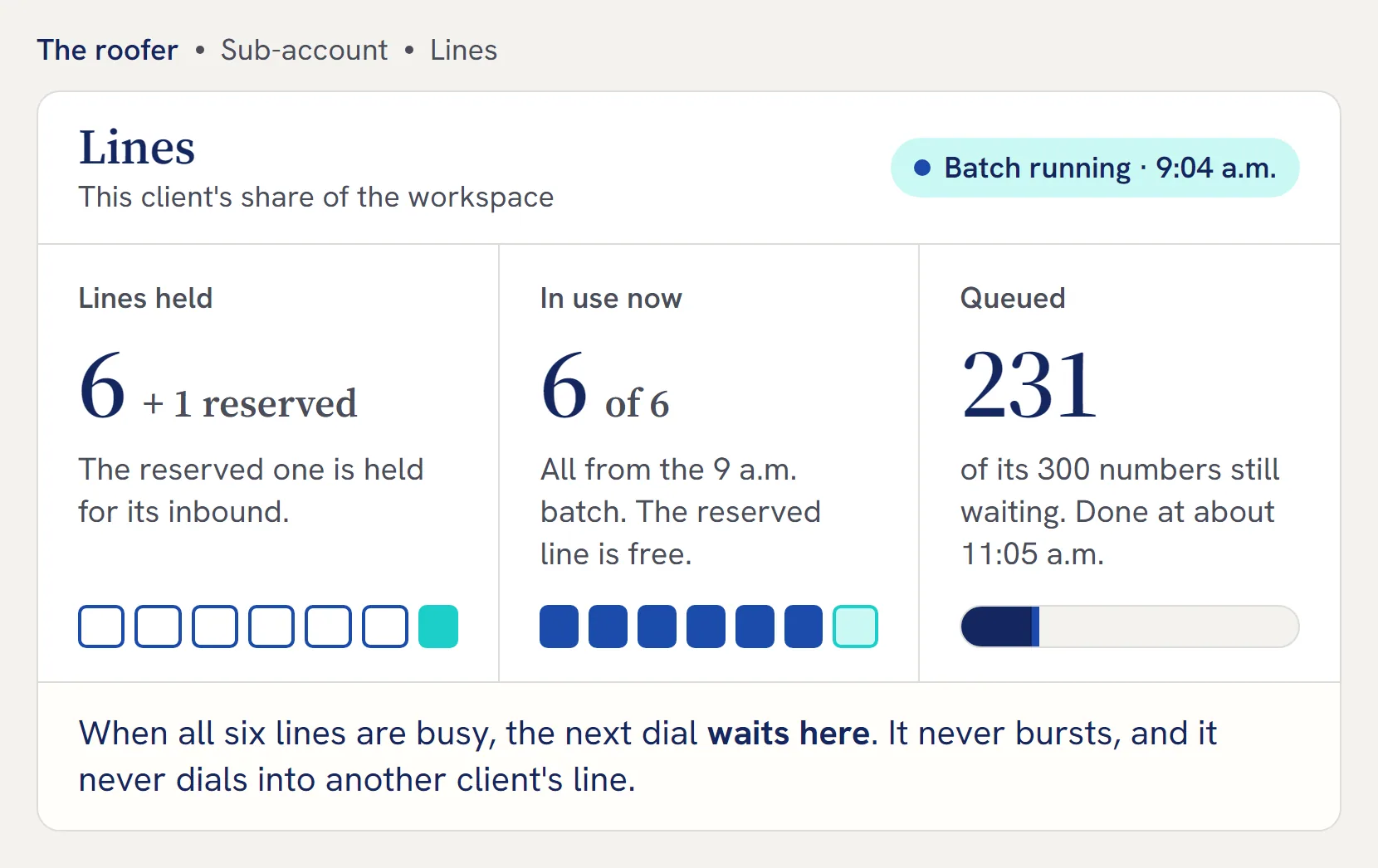
The roofer's batch on six of the 20 lines, a forecast for the dental office, a later call that reveals a refused one, and the month's statement.
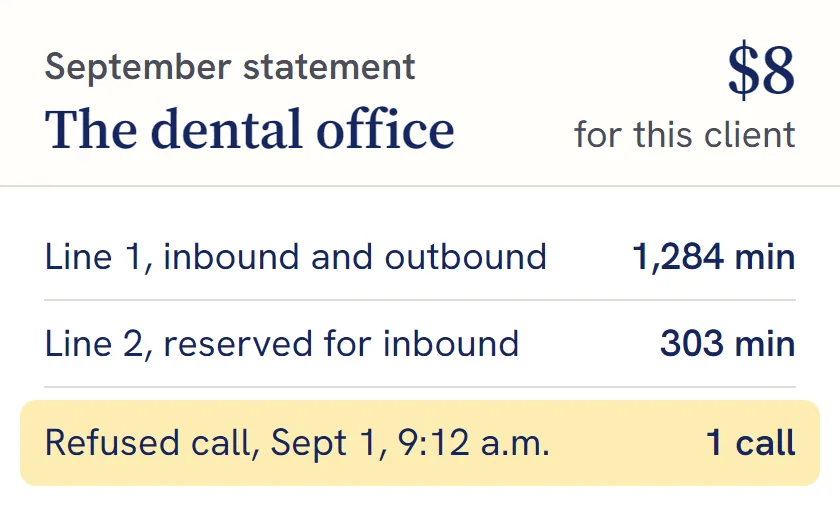
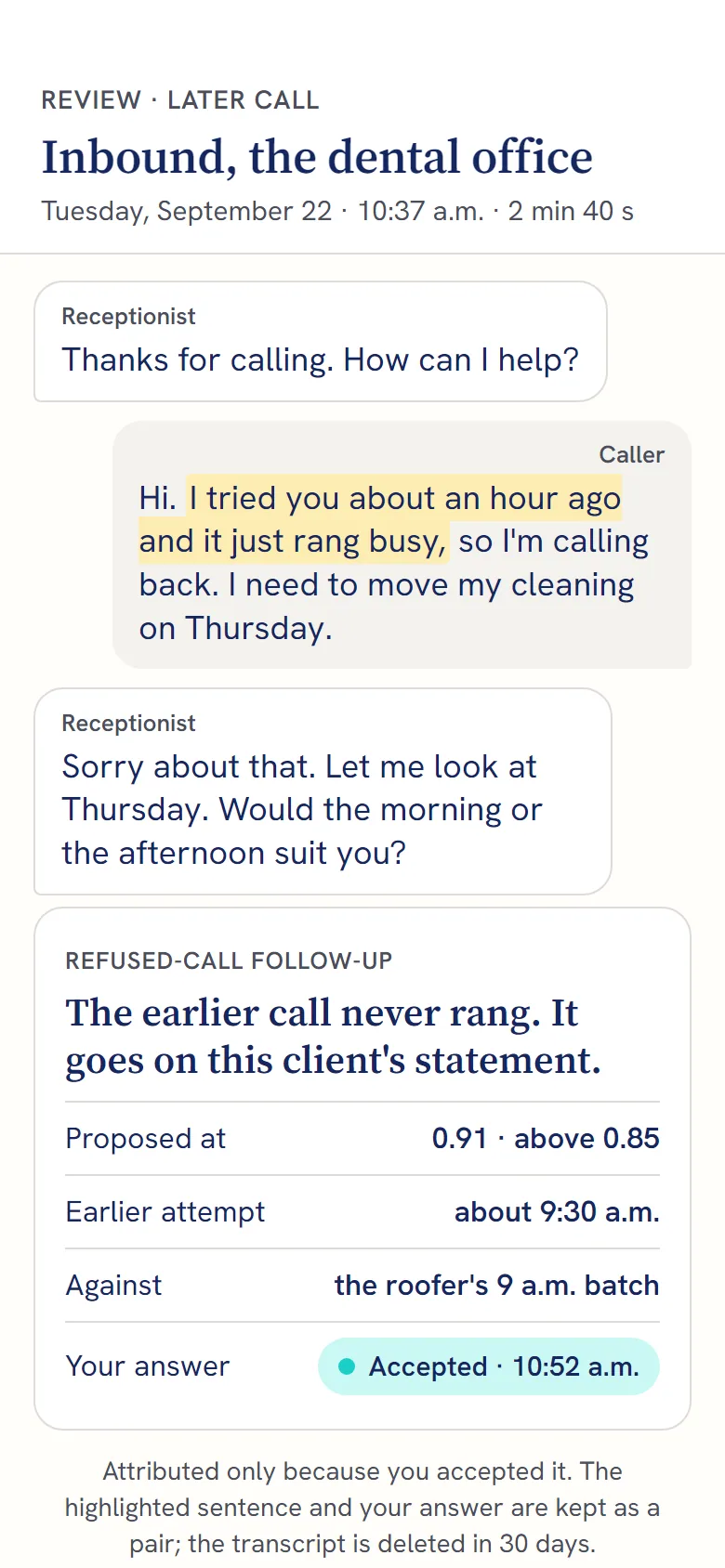
- One client's statement for the month: minutes by line, the one refused call a later transcript found, and the $8 its Ringdown lines cost.
- The 9 a.m. batch as the agency sees it: one client, 300 numbers, six lines of the twenty, and the fourteen that stayed free for everyone else.
- The forecast proposes a line count from the client's own call events. Nothing changes until you press Accept.
- A later call where the caller says the line was busy. The refused call is proposed above 0.85, accepted by you, and goes on the dental office's statement.
A fair objection
Or give every client its own workspace and let each keep its own 20.
If you already did, stop reading. Each client owns its quota, and you need no gate.
The rest of you run thirty clients from one workspace, because thirty workspaces is thirty quotas and thirty logins.
Ringdown keeps it that way.
- The workspace stays one account; the split lives in our count.
- Each workspace has its own concurrency figure. Reading thirty is a job.
- A client's lines are changed on its own Lines card.
What it leaves alone
Ringdown adds no lines and carries no calls. It decides whose dial goes next.
If your clients' inbound alone fills 20 lines, buy the vendor's $8 slots instead.
What's in scope
- 01Each client holds a share of the pool; its batch dials go out only while that share and the pool have room. Inbound never waits.
- 02Our own count, built from call events and reconciled once a minute, sits beside the vendor's figure, each with its time.
- 03A refused call is attributed from a later caller's transcript and carries that later call's ID.
What we don't do
- 01It adds no concurrency. When real inbound fills all 20 lines, the workspace refuses the next call and we only record it.
- 02It does not carry a call. Numbers, SIP trunks and audio all stay with the vendor.
- 03It does not invoice your client. The rate, and whether the roofer pays for its batch, stay with you.
Who it fits
Built for agencies with more than ten clients on one workspace
For three kinds of agency, a $4 card buys nothing.
This is for you if
- ✓Each client's receptionist sits in a GoHighLevel sub-account you already open.
This is not for you if
- ✕Under ten clients. A workspace each, a free twenty each, no card.
- ✕A client count of one. Nobody else is dialing into your twenty.
- ✕All batches, no inbound. Nothing to keep clear; $4 a client buys a slower batch nobody asked for.
Due to an error in the code, the concurrency of orgs are incorrectly calculated.
The workspace vendor's status announcementMay 25, 2026, while calls returned concurrency_limit_reached
Inside the tool you already run
A separate dashboard is one nobody at the agency opens.
The Lines card writes into the client's GoHighLevel sub-account. The dial endpoint takes the vendor's own create-call payload from whatever places the calls, with one added client id.
- GoHighLevel
- n8n
- Make
- Zapier
- Azure Logic Apps
The numbers
Three of the vendor's own numbers
The voice vendor's published default and prices. Ringdown changes none of them.
- 0120concurrent calls a pay-as-you-go workspace gets by default
- 02$8a month for every concurrent call above the first 20
- 03$0.10a minute, for the whole call, once a call bursts
The price per client
$4 per client per month, in four line items
Leave a name and a work email.
We write back asking how many clients share your workspace.
We reply within one business day.
- ✓ First month of every card free
- ✓ Install, mapping and the 90-day backfill: $0
- ✓ A 30-minute setup call with the person who wrote the mapping tool